US President Donald Trump has issued a dramatic new warning to Iran, declaring that the country’s military capabilities have been effectively dismantled and signaling that a third wave of strikes is imminent. Speaking ahead of a bilateral meeting in the Oval Office with German Chancellor Friedrich Merz, Trump said that “everything’s been knocked out” in Iran, describing the campaign as overwhelming and decisive.
The remarks come amid escalating tensions following coordinated US and Israeli military operations targeting Iran’s leadership, nuclear infrastructure and missile capabilities. As the region braces for further escalation, Trump’s latest comments suggest that Washington believes it has significantly weakened Tehran’s command structure and defense systems.
With retaliatory strikes already spreading across the Middle East, the prospect of a third wave raises concerns about deeper regional instability, economic fallout and the risk of a prolonged confrontation.
Operation Epic Fury and Leadership Strikes
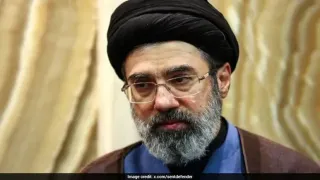
The warning follows the initial phases of Operation Epic Fury, during which senior Iranian leadership figures were reportedly eliminated. Trump claimed that dozens of individuals were taken out in the first wave, including figures viewed as potential successors within Iran’s leadership hierarchy.
He also referenced a subsequent strike targeting a gathering believed to be selecting new leadership, describing it as substantial and suggesting that those involved may have also been killed. According to Trump, “Most of the people we had in mind are dead,” indicating a deliberate strategy aimed at destabilizing Iran’s political and military command chain.
The targeting of high-level decision-makers underscores the broader objective of dismantling Iran’s governing structure and limiting its ability to coordinate military retaliation.
Claims of Military Neutralization
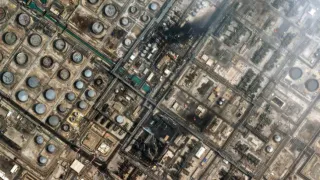
Trump asserted that Iran’s navy, air force, radar systems and air detection capabilities have been knocked out. He emphasized that the strikes were designed to eliminate the country’s operational readiness across multiple domains, including maritime and aerial defense.
“They have no navy, it’s been knocked out. They have no air force; that’s been knocked out. Their radar has been knocked out,” he said, reinforcing the message that the United States believes Iran’s military infrastructure has suffered catastrophic damage.
While independent verification remains limited, the claims signal Washington’s confidence in the scope and precision of the joint operation with Israel.
Third Wave of Strikes: What It Means
aTrump’s declaration that “a third wave is coming” suggests continued military pressure. The statement indicates that the campaign is not yet complete and that additional strategic targets may still be on the list.
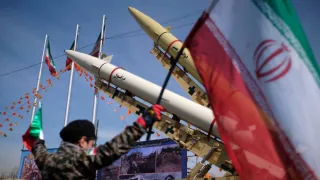
The first two waves reportedly focused on leadership figures and core military infrastructure. A third wave could potentially expand the scope to include deeper strategic installations, missile stockpiles or remaining air defense systems.
Such escalation carries risks of further retaliation from Iran and its regional allies, potentially widening the conflict beyond its current boundaries.
Iran’s Retaliation Across the Region
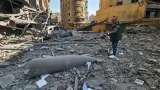
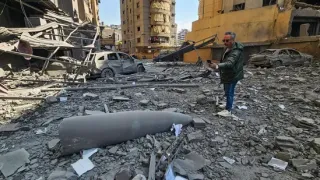
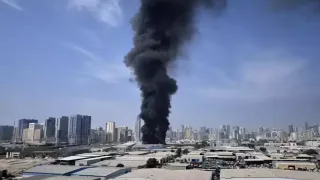
In response to the strikes, Iran has targeted US military installations in Bahrain, Kuwait and the United Arab Emirates, as well as the US Embassy in Riyadh. Missile launches and drone attacks have heightened tensions across the Gulf, forcing several countries to activate air defense systems and implement emergency security measures.
Hezbollah has also entered the confrontation, launching strikes against Israel in what it describes as retaliation for the death of Iran’s Supreme Leader Ayatollah Ali Khamenei. The widening theater of operations underscores the interconnected nature of alliances in the region.
As attacks and counterattacks continue, concerns are mounting over civilian safety, energy infrastructure and global shipping routes.
Conflicting Justifications for the War
The Trump administration has offered varying explanations for initiating military action. Secretary of State Marco Rubio indicated that the United States acted after learning that Israel intended to strike Iran. However, Trump later suggested that Washington moved first to prevent what he described as an imminent Iranian assault.
“Based on the way the negotiation was going, I think they were going to attack first,” Trump said, adding that he may have forced Israel’s hand. The comments reflect an evolving narrative surrounding the rationale for the operation.
Despite differing accounts, the stated primary objectives remain consistent: to destroy Iran’s nuclear and missile capabilities and to fundamentally alter the regime’s strategic posture.
Regional and Global Implications
The conflict has already triggered volatility in global markets, particularly in energy sectors. The Gulf region is a critical hub for oil exports and maritime trade, and any sustained disruption could have far-reaching economic consequences.
Airspace closures, embassy evacuations and heightened military readiness across neighboring states illustrate the scale of the crisis. Governments worldwide are closely monitoring developments, urging restraint while preparing contingency measures.
The potential third wave of strikes introduces further uncertainty. If realized, it could deepen geopolitical divisions, strain diplomatic relations and test the resilience of international security frameworks.
What Comes Next
aWith Trump signaling that the campaign is ongoing, attention now turns to Iran’s next move and the international community’s response. Diplomatic channels remain strained, and mediation efforts face significant challenges amid active hostilities.
The coming days may determine whether the conflict escalates into a broader regional war or transitions into a new phase of strategic deterrence. For now, the rhetoric from Washington suggests that military pressure will continue until what it considers decisive objectives are fully achieved.
As tensions remain high, the global community watches closely, aware that further escalation could reshape the balance of power in the Middle East and beyond.
Also Read: India’s Economy Faces Severe Shock as US Iran War Rages On