Global diplomatic tensions escalated sharply after US President Donald Trump launched a fierce attack on France, threatening sweeping trade penalties and publicly revealing a private message exchanged with French President Emmanuel Macron. The episode has added a new layer of strain to already fragile transatlantic relations.
The dispute unfolded against the backdrop of Trump’s controversial push for greater control and influence in the Arctic region, particularly Greenland. France’s public criticism of Washington’s justification for the move triggered a strong and unusually personal response from the US president.
As the confrontation expanded from policy disagreement into economic threats and public mockery, it highlighted how geopolitical rivalry, economic pressure, and political messaging are increasingly colliding on the global stage.
Trump Threatens 200 Percent Tariffs On French Wine And Champagne
Donald Trump warned that the United States could impose tariffs as high as 200 percent on French wine and champagne. The threat was directly linked to Paris’s reported decision to decline his invitation to join the proposed “Board of Peace.”
The announcement immediately sent shockwaves through diplomatic and trade circles, given France’s strong cultural and economic ties to its wine and champagne exports.
Trump framed the warning as leverage, suggesting economic pressure could influence France’s participation in the initiative.
The Board Of Peace Proposal Explained
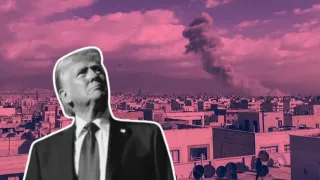
The Board of Peace was initially introduced as a mechanism to oversee the rebuilding of war-affected Gaza. However, its charter appears to extend far beyond a single region.
According to available details, the structure could be applied to global conflict zones, granting the board an unusually broad mandate.
This ambiguity has raised concerns among several countries, including France, about sovereignty, jurisdiction, and political intent.
Private Macron Message Shared Publicly
In a dramatic move, Trump shared a private message he received from French President Emmanuel Macron on his social media platform.
The message revealed that while both leaders agreed on issues related to Iran and Syria, Macron expressed confusion about Trump’s fixation on Greenland.
The public disclosure of private diplomatic communication was widely seen as a departure from traditional norms of international engagement.
Macron Proposed Dialogue And Diplomacy
In the message, Macron reportedly suggested meeting Trump and other G7 leaders on the sidelines of the World Economic Forum in Davos.
He also indicated openness to including representatives from Ukraine, Denmark, Syria, and Russia in broader discussions.
The French leader even extended an informal dinner invitation, reflecting a willingness to keep dialogue open despite disagreements.
France Declines Board Of Peace Invitation
France made it clear that it did not intend to respond favourably to the Board of Peace proposal.
Officials close to the French presidency indicated that the board’s scope exceeded the Gaza framework initially presented.
This expanded mandate raised red flags about potential interference in international decision-making.
Paris Mocks Washington Over Greenland Push
The situation intensified after France publicly mocked the US explanation for Trump’s Greenland policy.
A post from the French Ministry for Europe and Foreign Affairs used sharp analogies to criticise the logic behind preemptive action.
The message suggested that acting aggressively today to prevent hypothetical future threats was fundamentally flawed reasoning.
Satirical Analogies Trigger Strong Reaction
The French statement compared the argument to deliberately causing harm now to avoid possible dangers later.
Analogies involving fires, shark attacks, and car crashes were used to highlight what France described as illogical justification.
The sarcastic tone drew widespread attention and clearly irritated the US leadership.
US Treasury Secretary Defends Arctic Strategy
US Treasury Secretary Scott Bessent defended Trump’s Arctic focus by citing long-term security concerns.
He argued that future threats from Russia in the Arctic region could draw Nato members into conflict.
According to this view, strengthening US influence now could prevent greater instability later.
Greenland At Center Of Geopolitical Tensions
Greenland’s strategic location between North America and Europe makes it crucial for Arctic security.
The region plays a key role in missile detection systems and emerging shipping routes.
As Arctic ice continues to melt, global competition over influence has intensified.
France Rejects Economic Pressure Tactics
French officials described Trump’s tariff threats as unacceptable and ineffective.
They emphasized that economic coercion should not be used to shape foreign policy decisions.
Paris reiterated that national positions would be determined through diplomacy, not pressure.
Trade Threats Raise Global Concern
The possibility of massive tariffs revived fears of renewed trade wars between allies.
European leaders expressed concern that economic retaliation could destabilize global markets.
Wine producers and exporters also worried about the commercial fallout.
Transatlantic Relations Under Pressure
The confrontation reflects growing strain in relations between the United States and Europe.
Differences over security strategy, diplomacy, and economic tools have become more visible.
The episode risks deepening mistrust among long-standing allies.
Impact On Global Diplomacy
By mixing trade threats with geopolitical disputes, the situation highlights a shift in diplomatic style.
Policy disagreements are increasingly being fought through public messaging rather than private negotiation.
This approach has altered how global diplomacy functions in the modern era.
Role Of Social Media In Escalation
Trump’s use of social media played a significant role in amplifying the conflict.
Statements that once remained behind closed doors are now instantly global.
This immediacy often leaves little room for quiet resolution.
European Unity On Sovereignty
France’s stance has been interpreted as part of a broader European position on sovereignty.
Many European leaders believe territorial matters should not be subject to external pressure.
The Greenland debate has therefore taken on symbolic importance.
Economic Tools As Political Weapons
The threat of tariffs illustrates how trade instruments are increasingly used as leverage.
Such measures blur the line between economic policy and political coercion.
This trend has reshaped international negotiations.
Concerns Over Precedent
Diplomats worry that normalising such tactics could encourage similar actions globally.
If economic punishment becomes routine, multilateral cooperation may weaken.
This fear has driven cautious reactions from many capitals.
France Stresses Multilateral Dialogue
French officials continue to emphasize negotiation through established international frameworks.
They argue that cooperation remains essential for global stability.
Unilateral action, they warn, risks long-term fragmentation.
Political Messaging Ahead Of Global Summits
The timing of the dispute is significant as global leaders prepare for major international meetings.
Disagreements aired publicly could influence negotiations behind closed doors.
The Greenland issue may now feature prominently in upcoming discussions.
Public Opinion And National Pride
Both sides have framed their positions in ways that appeal to domestic audiences.
National pride and political messaging play a key role in shaping responses.
This dynamic often complicates compromise.
What Lies Ahead
It remains uncertain whether the tariff threat will materialize.
Diplomatic channels are still open, though tensions remain high.
The coming weeks may determine whether confrontation gives way to negotiation.
A Test For Western Alliances
The episode represents more than a bilateral disagreement.
It tests the resilience of Western alliances in a changing global order.
How the dispute is resolved could shape future cooperation.
Conclusion
Trump’s clash with France over Greenland, tariffs, and the Board of Peace has evolved into a major diplomatic flashpoint.
With economic threats, public mockery, and strategic rivalry all intertwined, the situation underscores the complexity of modern geopolitics.
Whether dialogue prevails over escalation will define the next chapter in transatlantic relations.
Also Read: Border 2 To Reveal First Big Update On Dhurandhar 2