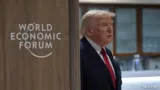
The atmosphere at the World Economic Forum in Davos was tense as global leaders gathered amid rising geopolitical uncertainty. What was expected to be a routine appearance by the U.S. President quickly transformed into a moment that captured worldwide attention. Remarks delivered during the summit carried consequences far beyond the conference halls, touching the foundations of long-standing international alliances.
The implications of his remarks were enormous, potentially rupturing an alliance that has held firm since the dawn of the Cold War and seemed among the globe's most unshakable pacts. As diplomats, investors, and policymakers listened closely, questions emerged about the future of transatlantic unity and the evolving balance of power in the Arctic region.
Updated discussions at Davos reflected a world increasingly shaped by strategic geography, security concerns, and economic leverage. Against this backdrop, the sudden reversal of a major trade threat signaled both uncertainty and opportunity in global diplomacy.
Trump Cancels Planned Tariffs After NATO Framework Agreement
President Donald Trump announced that he was cancelling a planned tariff targeting U.S. allies in Europe following discussions with NATO leadership. The decision came after both sides agreed on a framework for a future deal centered on Arctic security, a region gaining strategic importance due to climate change and expanding global competition.
The move marked a sharp shift from earlier statements in which the President had linked trade pressure directly to U.S. ambitions regarding Greenland. By stepping back from economic retaliation, the administration signaled an attempt to stabilize relations while keeping broader strategic goals firmly in view.
Officials described the framework as an initial step rather than a finalized agreement, leaving room for negotiation. Nevertheless, the announcement eased immediate fears of a trade rift between Washington and European capitals.
Extraordinary Davos Speech Draws Global Attention
In an extraordinary address at the World Economic Forum, the President openly discussed territorial ambitions, describing Greenland as strategically valuable despite calling it cold and poorly located. His blunt language stunned many attendees accustomed to carefully measured diplomatic statements.
The speech emphasized the belief that the United States has historically borne a disproportionate burden in defending Europe. Referencing past conflicts and decades of security commitments, he framed his demands as modest compared to what America had already provided.
While the tone drew criticism, it also reinforced a consistent theme of his presidency: leveraging pressure to extract concessions. The remarks underscored a negotiating style that prioritizes strength, unpredictability, and public messaging.
Concerns Over NATO Unity and Cold War Foundations
The implications of the speech extended beyond trade and territory, raising alarms about NATO’s cohesion. Founded to counter the Soviet Union, the alliance has long been regarded as one of the world’s most durable security partnerships.
European leaders expressed concern that aggressive rhetoric could weaken mutual trust. Greenland’s status as part of the Kingdom of Denmark placed the issue squarely within NATO’s internal dynamics rather than as an external dispute.
Any perception of pressure among allies risked opening fractures at a time when unity is considered critical amid rising global tensions.
Greenland at the Center of Arctic Strategy
The President has repeatedly argued that control over Greenland is vital for national and international security. Situated along key Arctic routes, the island plays an increasingly significant role as melting ice opens new shipping lanes and access to resources.
The United States already maintains a substantial military presence on the island, yet officials argue that broader influence is necessary to counter expanding activity from rival powers in the Arctic Ocean.
This strategic logic has turned Greenland from a remote territory into a focal point of global competition.
Denmark Responds With Firm Red Lines
Danish officials reacted cautiously but firmly following the speech. While expressing openness to discussions around security cooperation, Copenhagen reiterated that sovereignty remains non-negotiable.
Government representatives emphasized that any dialogue must respect established international norms. Denmark’s position reflects widespread European concern that territorial integrity must not be compromised, regardless of strategic interests.
The response sought to balance diplomacy with clarity, aiming to prevent escalation while maintaining national authority.
Greenland Government Urges Civil Preparedness
In Greenland itself, the government issued guidance urging citizens to be prepared for potential crises. A publicly released handbook advised residents to maintain essential supplies such as food, water, fuel, and emergency materials.
The move was presented as precautionary rather than alarmist, reflecting heightened awareness rather than immediate threat. Still, it underscored how global power struggles can directly affect local communities.
Residents in Nuuk and other towns responded by quietly preparing, reflecting a mix of uncertainty and resilience.
Public Reaction Reflects Unease and Realism
Many citizens expressed skepticism toward the rhetoric while acknowledging the need for readiness. For some, the statements felt like negotiating tactics rather than imminent danger.
Others viewed preparedness as a sensible response in an unpredictable global environment. The mood across Greenland blended caution with practicality, shaped by geography and history.
The episode illustrated how international politics can quickly reach everyday households.
Warning Messages and Calls for Negotiation
During his remarks, the President issued pointed warnings, urging NATO members to step aside and allow negotiations to proceed. His language suggested long-term consequences for those who resist U.S. objectives.
He called for immediate negotiations, emphasizing security over monetary valuation. Rather than naming a purchase price, he framed the issue as one of global protection.
This approach reinforced the idea that national security, rather than economics alone, lies at the heart of the dispute.
European Leaders Push Back on Territorial Integrity
European officials responded by reaffirming foundational principles of sovereignty. Denmark’s foreign minister acknowledged relief at assurances that military force would not be used but criticized the broader mindset behind the demands.
Leaders stressed that Greenland, as part of NATO territory, remains under Danish authority. Their statements aimed to close the door on any precedent that could challenge existing borders.
The pushback highlighted the limits of alliance flexibility when core values are tested.
Economic Comparisons Add Another Layer
In addition to security issues, the President contrasted the U.S. economy with Europe’s performance. He portrayed America as booming while suggesting European economies were lagging behind.
These comments reinforced a narrative of economic dominance and dependency, suggesting that transatlantic fortunes rise and fall together.
Such comparisons added a financial dimension to an already complex diplomatic moment.
Davos Atmosphere and Global Reactions
The arrival of the U.S. delegation drew mixed reactions from onlookers, reflecting the polarized global perception of American leadership. Inside the forum hall, the response remained largely restrained and formal.
World leaders, executives, and investors listened through multilingual headsets as the speech unfolded, underscoring its global reach.
Despite controversy, the address dominated conversations throughout the summit.
Meetings and Reassurances After the Speech
Following the keynote, the President met with several international leaders, repeating assurances that military action was not under consideration.
He emphasized that judgment and negotiation would guide future steps, attempting to calm immediate fears.
While questions remain unresolved, the meetings reflected an effort to reframe dialogue after a volatile address.
What the Episode Means for Global Politics
The Davos episode highlighted how quickly rhetoric can reshape diplomatic landscapes. A single speech raised questions about alliances built over generations.
At the same time, the cancellation of tariffs demonstrated the power of negotiation frameworks to de-escalate tensions.
As Arctic importance continues to grow, the balance between cooperation and competition will likely define international relations in the years ahead.
Also Read: Apple Hints at New MacBook Pro Release Date Coming Soon