There is something quietly powerful about the way an ancient calendar system continues to shape the rhythm of millions of lives. From the farmer deciding when to sow seeds, to the city-dweller choosing an auspicious hour to sign a new deal. On March 11, 2026, the traditional Hindu Panchang brings together a spiritually significant fast, a rare yogic alignment, and a set of time windows that believers have consulted for centuries. Whether you follow Vedic astrology devoutly or simply find its frameworks fascinating, here is everything worth knowing about this day.
Tithi and Paksha for March 11, 2026
March 11, 2026, falls on a Wednesday (Budhwar) in the Krishna Paksha (waning lunar phase) of Chaitra month in Vikrami Samvat 2082, Shaka Samvat 1947, the year named Vishwaavasu.
The Ashtami tithi (eighth lunar day) prevails through the day, remaining until 28:20, which translates to 04:20 AM on March 12. Before that, Saptami ends at 01:55 AM, making the transition seamless and keeping the Ashtami energy dominant across the waking hours.
The presiding nakshatra is Jyeshtha, one of the more intense and transformative lunar mansions, lasting until 21:52. Jyeshtha is associated with authority, protection, and inner strength, qualities that infuse the day's energy with a certain seriousness.
Complete Panchang Table for March 11, 2026
| Element | Detail | Timing |
|---|---|---|
| Tithi | Ashtami | Until 28:20 |
| Nakshatra | Jyeshtha | Until 21:52 |
| First Karana | Balava | Until 15:07 |
| Second Karana | Kaulava | Until 28:20 |
| Paksha | Krishna | |
| Var | Wednesday (Budhwar) | |
| Yoga | Vajra | Until 09:06 |
| Sunrise | 06:30 AM | |
| Sunset | 06:18 PM | |
| Moonrise | 00:35 (after midnight) | |
| Moonset | 10:30 AM | |
| Moon Sign | Vrishchika (Scorpio) | |
| Rahukaal | 12:24 PM to 13:52 PM | |
| Vikrami Samvat | 2082 | |
| Shaka Samvat | 1947 (Vishwaavasu) | |
| Maas | Chaitra | |
| Abhijit Muhurat | Not available |
Sheetala Ashtami 2026
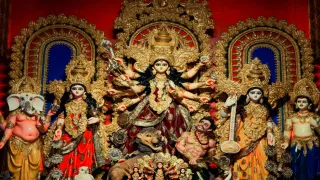
The most spiritually significant event of March 11 is Sheetala Ashtami, a widely observed fast dedicated to Goddess Sheetala, the deity who governs disease, fever, and bodily afflictions. Revered especially across North and Central India, this fast carries deep cultural roots.
What makes the ritual distinctive is its core practice: devotees prepare food a day in advance and consume only cold, day-old meals on Sheetala Ashtami. No cooking fires are lit in the home on this day. The symbolism is layered. By not igniting the hearth, families symbolically honour the cooling, healing power of the goddess and seek her protection against fevers, pox, and seasonal illnesses.
In states like Rajasthan, Uttar Pradesh, and Madhya Pradesh, the day is marked by early-morning temple visits, ritual bathing, and the offering of cold foods including curd, rice, and rabri (sweetened condensed milk). The timing, falling in early spring, is also practical. It is a transitional season when infections tend to spike.
For those observing the fast, the day begins with a sacred bath, followed by the worship of Goddess Sheetala with cold offerings and prayers for the health and well-being of the family.
Vajra Yoga on March 11, 2026
March 11 also carries the presence of Vajra Yoga, lasting until 09:06 AM. In Vedic astrology, yoga refers to specific planetary combinations that color the quality of a time period.
Vajra, meaning thunderbolt or diamond, is a yoga of mixed nature. It carries sharpness, intensity, and the capacity for decisive action, but it also requires caution. Traditional Panchang wisdom suggests that the early morning hours under Vajra Yoga are better suited for spiritual practices and meditation than for beginning major new ventures.
The two karanas (half-tithis) of the day are Balava until 15:07 and Kaulava until 28:20, both considered auspicious and supportive of routine work, family activities, and daily worship.
Shubh Muhurat on March 11, 2026
Timing is everything in Vedic tradition. On this day, no Abhijit Muhurat is available. Abhijit, the crown jewel of auspicious time windows, does not occur on Wednesdays, making those who rely on it for major decisions wait.
However, other auspicious windows remain intact.
| Muhurat | Timing | Best Used For |
|---|---|---|
| Brahma Muhurat | 05:14 AM to 06:02 AM | Prayer, meditation, yoga, study. The mind is sharp, the world is still. |
| Godhuli Muhurat | 06:45 AM to 07:09 AM | Auspicious beginnings, especially related to marriage, travel, and new projects. |
| Vijay Muhurat | 02:48 PM to 03:36 PM | Launching tasks where success and completion are desired. |
Chaughadiya Muhurat for March 11, 2026
For those who plan their day around chaughadiya, here are the auspicious time segments.
| Chaughadiya | Type | Timing |
|---|---|---|
| Char | Daytime | 09:26 AM to 10:55 AM |
| Labh | Daytime | 10:55 AM to 12:23 PM |
| Amrit | Daytime | 12:23 PM to 01:51 PM |
| Shubh | Daytime | 03:20 PM to 04:48 PM |
| Labh | Night | 07:48 PM to 09:20 PM |
| Shubh | Night | 10:51 PM to 12:23 AM |
| Amrit | Night | 12:23 AM to 01:54 AM |
| Char | Night | 01:54 AM to 03:26 AM |
Sun and Moon Timings on March 11, 2026
On March 11, 2026, sunrise is at 06:30 AM, and sunset falls at 06:18 PM. The moon rises at 00:35, after midnight, and moonset occurs at 10:30 AM.
The Moon transits through Scorpio (Vrishchika Rashi), ruled by Mars. This placement lends the day a quality of depth, intensity, and emotional undercurrent. Scorpio Moon days are known for heightened intuition, but also for the surfacing of buried emotions. It is a day to proceed with awareness rather than impulsiveness.
Inauspicious Timings and Rahukaal on March 11, 2026
Alongside the auspicious windows, the Panchang also flags periods to approach with care.
| Inauspicious Period | Timing | Significance |
|---|---|---|
| Rahukaal | 12:24 PM to 01:52 PM | The most widely observed inauspicious window. Ruled by Rahu, this period is traditionally avoided for new ventures, travel, and important decisions. |
| Gulik Kaal | 10:55 AM to 12:24 PM | Another unfavourable segment, associated with Saturn's shadow influence. |
| Yamganda | 07:58 AM to 09:27 AM | The window associated with Yama, the god of death, is considered best avoided for new beginnings. |
Whether you observe Sheetala Ashtami with full ritual or simply pause in the Brahma Muhurat for a moment of quiet, March 11, 2026, offers its own particular invitation: to slow down, tend to health, and move through the day with intention.
Note: Panchang timings are based on the Hindu calendar for the Indian Standard Time (IST) zone. Readers in different regions may note slight variations.
Also Read: Daily Horoscope March 11, 2026: All 12 Zodiac Signs