In the final hours before one of the most dramatic covert operations in recent geopolitical history, Venezuelan President Nicolás Maduro appeared relaxed and defiant. At the Miraflores Palace in Caracas, he posed for photographs alongside China’s top envoy to Latin America, praising Beijing’s leadership and publicly reaffirming a bond forged through years of political alignment and mutual resistance to US influence.
What unfolded next stunned the world. As darkness fell, elite US special forces executed a daring nighttime raid, extracting Maduro from his residence and abruptly ending his rule. Within hours, China was confronted with a harsh new reality: one of its most loyal strategic partners in the Western Hemisphere was gone, and the balance of power in Latin America had shifted dramatically.
The capture has sent shockwaves through diplomatic circles, energy markets, and military planners alike. While Beijing has officially condemned Washington’s actions, the episode has sparked a very different reaction online in China, where millions are openly debating what the operation could mean for Taiwan and beyond.
A Relationship Built on Ideology and Mutual Defiance
China and Venezuela have cultivated a close partnership over decades, united by shared skepticism of US-led global order and a desire to counter Western influence. Under the leadership of Hugo Chávez and later Nicolás Maduro, Caracas positioned itself as a reliable ally for Beijing in Latin America.
The relationship deepened further with the declaration of an all-weather strategic partnership in 2023. Through this framework, China expanded its economic assistance, diplomatic backing, and political engagement, effectively pulling Venezuela deeper into its geopolitical orbit.
For Beijing, Venezuela represented both a symbolic and practical foothold in a region long viewed as Washington’s backyard.
Oil, Infrastructure, and Billions in Chinese Investment
Energy cooperation has been at the heart of China–Venezuela ties. The bulk of Venezuelan oil exports have flowed to China in recent years, especially after US sanctions tightened access to Western markets. Discounted crude made Venezuelan oil attractive to Chinese buyers, particularly independent refiners.
Beyond oil, Chinese companies financed and built extensive infrastructure projects across Venezuela, ranging from power generation to transportation and telecommunications. These investments were backed by massive loans extended over nearly two decades.
Between 2007 and the late 2010s, Venezuela emerged as the single largest recipient of Chinese financing worldwide, highlighting the depth of Beijing’s long-term commitment.
Trump’s Move and the Sudden Strategic Shock
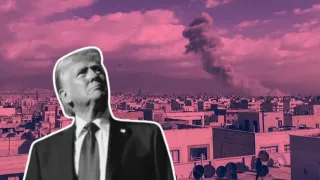
The capture of Maduro under US direction has abruptly disrupted this relationship. For China, the loss is not just diplomatic but strategic, raising immediate questions about continued access to Venezuelan oil and the security of its investments.
While analysts believe China’s overall energy security is unlikely to be severely affected, the symbolic damage is significant. The operation demonstrated Washington’s willingness to use direct force to reshape political outcomes in the region.
This sudden shift has forced Beijing to reassess its influence and leverage in Latin America.
Beijing’s Official Condemnation
China’s government was quick to denounce the operation, accusing the United States of acting as a global policeman and violating international norms. Official statements called for the immediate release of Maduro and his wife, framing the incident as a dangerous precedent.
President Xi Jinping echoed these sentiments in broader terms, condemning what he described as unilateral bullying that undermines the international order. He stressed the need for major powers to respect sovereignty and adhere to international law.
State-run media amplified this message, portraying the raid as proof of US hypocrisy and self-interest.
Chinese Social Media Erupts Over Taiwan Comparisons
While official rhetoric emphasized restraint and condemnation, Chinese social media told a different story. Discussions surrounding the capture exploded online, drawing hundreds of millions of views within days.
Many users openly speculated whether the US operation could serve as a blueprint for China’s own ambitions toward Taiwan. If Washington could extract a leader from its perceived sphere of influence, some asked, why could Beijing not do the same?
This surge of nationalist sentiment highlighted the growing gap between official diplomacy and popular online discourse.
Taiwan at the Center of the Debate
China’s ruling Communist Party has long claimed Taiwan as its territory, despite never having governed the self-ruled island. Beijing has repeatedly vowed to achieve reunification, by force if necessary.
In recent years, military pressure on Taiwan has intensified, with large-scale exercises and simulated blockades serving as warnings. The capture of Maduro has added fuel to speculation about how far China might be willing to go.
However, comparisons between Venezuela and Taiwan remain deeply contested.
Why Taiwan Is Not Venezuela
In Taiwan, political leaders and defense experts have largely dismissed the notion that China could replicate a similar operation. Lawmakers argue that the strategic, military, and political contexts are entirely different.
Taiwan’s geographic position, advanced defenses, and international support make any such scenario far more complex and risky. Unlike Venezuela, Taiwan sits at the heart of a highly sensitive regional security framework.
These differences underscore why Beijing continues to approach the Taiwan issue with caution.
Military Capability and Strategic Calculations
Analysts note that China’s decision-making on Taiwan is shaped by multiple factors, including domestic economic stability, military readiness, and the island’s internal politics.
While nationalist rhetoric may surge online, the leadership in Beijing must weigh the immense risks of escalation with the United States and its allies.
As a result, bold online speculation does not necessarily translate into imminent military action.
Lessons Drawn by the People’s Liberation Army
Accounts linked to China’s military have used the incident to emphasize the importance of strong defense capabilities. Commentaries stressed that weakness invites crisis and that preparedness is essential to deter powerful adversaries.
This messaging aligns with broader efforts to justify increased military spending and modernization. The focus, however, remains defensive rather than overtly expansionist.
Still, the psychological impact of the operation is difficult to ignore.
China’s Selective View on Sovereignty
Critics have pointed out inconsistencies in Beijing’s stance on sovereignty. While condemning US actions in Venezuela, China refrained from condemning Russia’s invasion of Ukraine, instead echoing narratives critical of NATO.
This selective approach reflects strategic interests rather than principled consistency. It also complicates China’s attempts to position itself as a defender of international norms.
The Maduro episode has once again exposed these contradictions.
Latin America and China’s Long-Term Strategy
China’s influence in Latin America extends well beyond Venezuela. Through trade, investment, and infrastructure projects, Beijing has steadily expanded its footprint across the region.
Even with Maduro’s removal, experts believe China will seek to protect its economic interests rather than engage in direct geopolitical confrontation with Washington.
Power supply, telecommunications, and critical infrastructure remain areas where China retains significant leverage.
A New Global Normal Takes Shape
For observers worldwide, the operation signals a shift toward more assertive use of military force in pursuit of foreign policy goals. This evolving reality has implications far beyond Venezuela.
For Taiwan, the lesson is not that invasion is imminent, but that deterrence and preparedness are more important than ever. Strengthening defense capabilities and international partnerships remains a priority.
As global power competition intensifies, the capture of Maduro may be remembered not just as a regional turning point, but as a defining moment in a rapidly changing world order.
Also Read: Temple Must Light Lamp: Madras HC Order in Deepam Row