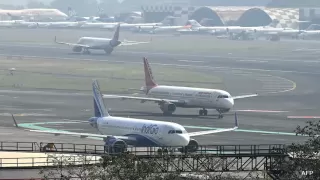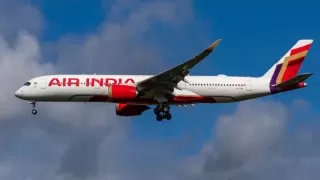
With the IndiGo flight disruptions continuing on the fifth consecutive day, the Ministry of Civil Aviation on Saturday (December 6, 2025) announced capping of airfares to control the surge in ticket prices due to breakdown in the private carrier’s flight services. The Ministry invoked its regulatory powers after noting “unusually high airfares” as travellers booked with IndiGo scrambled to make alternative arrangements. IndiGo had cancelled over 400 flights from four major airports as of Saturday afternoon.
In an official directive, all airlines have been instructed to strictly adhere to the newly prescribed fare caps — a move aimed at stabilising prices until the situation fully stabilises. Any deviation from the prescribed norms is stated to attract immediate corrective action, underlining the government’s commitment to protect passengers during the crisis. The directive echoes similar fare-cap measures previously invoked by the government in May 2020.
The objective of this intervention, the Ministry said, is to maintain pricing discipline in the aviation market and prevent exploitation of passengers — especially vulnerable ones such as senior citizens, students and patients who urgently need to travel. By enforcing fare caps, the government aims to ensure that such travellers are not subjected to financial hardship during this period of instability.
Why Fare Caps Became Necessary Amid IndiGo’s Crisis
The disruption at IndiGo — triggered by crew-planning failures, implementation of stricter flight-duty norms and resultant manpower shortage — caused a cascade of cancellations across the airline’s domestic network. The Directorate General of Civil Aviation (DGCA) along with the Ministry held a high-level review meeting, noting that IndiGo’s inability to rework crew rosters after the revised Flight Duty Time Limitation (FDTL) norms came into effect led to a sharp reduction in flight capacity.
With substantially fewer IndiGo flights operating, demand for seats on alternate airlines surged sharply. This abrupt imbalance between supply and demand caused airfares on other carriers to spike — pushing ticket prices to levels described by the Ministry as “unusually high.” To prevent opportunistic pricing during this disruption, government intervention saw the re-imposition of fare caps.
What the Fare Caps Order Entails
The fare-cap directive applies to all airlines operating on the affected routes, not just IndiGo. The Ministry has mandated strict compliance with the newly prescribed maximum fare levels until normalcy returns. Any airline or travel platform found charging above the cap will face immediate corrective action.
Authorities have also said they will continuously monitor fare levels in real time, coordinating with airlines and online travel platforms to ensure adherence. The caps remain a temporary measure — intended only for the duration of the disruption. Once flight operations stabilise, the fare caps are expected to be lifted.
Who Benefits — And Why It Matters for Travellers
The fare caps are especially beneficial for those forced to travel under duress: senior citizens, students, patients, and other travellers whose plans were upended by IndiGo’s mass cancellations. The government said the measure ensures that such vulnerable travellers are not exploited during heightened demand and limited capacity.
Moreover, the policy aims to restore fair competition in the domestic aviation market. By preventing airlines from inflating prices during a supply crunch, the government seeks to uphold principles of consumer protection and equitable access to air travel. :contentReference[oaicite:11]{index=11}
What Led to IndiGo’s Operational Breakdown and Its Wider Impact
The crisis began when the revised FDTL norms — aimed at ensuring better fatigue management for pilots — were phased in, requiring airlines to overhaul crew rosters. IndiGo reportedly failed to appropriately plan for the increased crew-rest requirements and night-flying restrictions, resulting in acute manpower shortage. The DGCA flagged these planning gaps as the root cause of the persistent cancellations.
The disruption has had far-reaching effects beyond IndiGo passengers alone. With IndiGo carrying a substantial share of domestic air traffic, its operational collapse disrupted bookings across the domestic network — leading to chaos at major airports, severe inconvenience for travellers, and a surge in demand on alternate airlines. It is this surge that triggered the fare-spike and consequent government intervention.
Government Response: Oversight, Inquiry and Measures for Relief
In response to the crisis, the Ministry of Civil Aviation, alongside DGCA, has launched a high-level inquiry to examine what went wrong, identify accountability, and recommend safeguards against future disruptions.
At the same time, the government has directed airports and relevant authorities to provide full assistance to stranded passengers — including hotel accommodation where needed, real-time helpline support, and efforts to re-route or reschedule travellers wherever possible.
When Fare Caps May Be Lifted — And What to Watch Out For
The fare caps are explicitly described by the Ministry as a temporary measure, valid only until flight operations normalise and capacity stabilises. Airlines have been warned that any breach will lead to corrective action.
Travellers and observers will be watching for signs of stabilisation — such as reduction in cancellations, smooth crew rosters under FDTL norms, and restoration of full flight capacity by airlines. Once that happens, fare levels are expected to return to market-driven rates. Until then, the fare-cap regime remains a safeguard to prevent exploitation of distressed passengers.
Also Read: AVM Saravanan: Legacy of Tamil Cinema’s Last Studio Icon