Fresh uncertainty has clouded India–US trade relations after remarks by the US Commerce Secretary suggested that a long-discussed trade agreement has effectively fallen apart. The comments have reignited debate around diplomatic protocol, leadership-level engagement, and the fragile nature of high-stakes international negotiations.
The statement has drawn attention not only because of its blunt tone, but also because it places personal communication between leaders at the center of a deal involving billions of dollars in trade. At a time when tariffs, sanctions, and geopolitical alignments are rapidly shifting, the claim has added a new layer of complexity to bilateral ties.
With exporters, industries, and policymakers closely watching developments, the stalled agreement raises questions about what went wrong, what lies ahead, and how India and the US may recalibrate their economic partnership amid global pressures.
US commerce secretary claims deal stalled over missed call
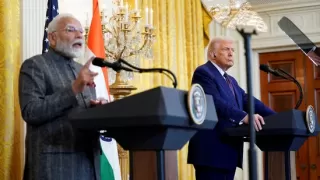
The controversy stems from remarks made by US Commerce Secretary Howard Lutnick, who claimed that the India–US trade deal failed to materialise because Prime Minister Narendra Modi did not personally call US President Donald Trump. According to Lutnick, such a call was a crucial final step required to seal the agreement.
He asserted that while negotiations had been largely set up, the absence of direct leader-to-leader communication caused momentum to stall. The comments have sparked debate on whether diplomatic conventions or strategic caution played a role in delaying the deal.
Podcast remarks trigger political and economic debate
Lutnick made the remarks during a widely followed podcast discussion, where he reflected on trade negotiations with several countries. He suggested that India was initially expected to finalise its agreement ahead of others, but hesitation at the last stage altered the sequence of outcomes.
The public nature of these comments has intensified scrutiny, as such negotiations are typically discussed behind closed doors. Observers say the remarks may reflect frustration within the US administration over missed timelines and shifting negotiation dynamics.
Deals with other Asian nations moved ahead
According to the US Commerce Secretary, while India hesitated, trade agreements with countries such as Indonesia, the Philippines, and Vietnam were concluded. These deals were negotiated under the assumption that India’s agreement would be finalised first.
When those agreements were announced at higher tariff rates, India’s position reportedly weakened. The changing landscape meant that terms previously discussed with New Delhi were no longer available, complicating efforts to revive the deal.
US steps back from earlier agreed framework
Lutnick went further to state that the US has stepped back entirely from the trade deal that was earlier agreed upon. He suggested that Washington is no longer actively considering that specific framework, indicating a significant cooling of enthusiasm.
This assertion implies that any future engagement would likely require renegotiation rather than a simple revival of past terms, raising the stakes for both sides.
Tariff tensions add pressure to negotiations
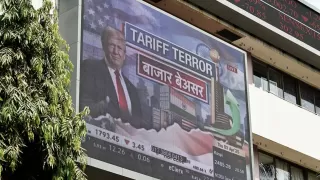
The collapse of talks follows a period of heightened tariff tensions, with the US imposing steep duties on Indian goods. These tariffs, among the highest faced by India, have affected sectors ranging from manufacturing to consumer products.
Despite these barriers, India’s exports to the US have shown resilience, underscoring the depth of trade ties. However, exporters argue that prolonged uncertainty and high duties threaten long-term competitiveness.
Russian oil purchases complicate relations
Trade tensions are also intertwined with geopolitical concerns, particularly India’s continued purchase of Russian oil. US officials have repeatedly expressed dissatisfaction, framing the issue within broader efforts to pressure Russia.
The approval of sweeping sanctions legislation in the US has raised concerns in New Delhi about potential punitive measures that could further strain economic relations.
Sanctions bill raises stakes for India
The sanctions framework grants the US president wide authority to penalise countries continuing to buy Russian energy. For India, which relies on discounted Russian oil, this presents a difficult balancing act between energy security and diplomatic risk.
Such developments have added urgency to trade talks, as higher tariffs combined with sanctions could significantly impact bilateral commerce.
Awaited Supreme Court ruling on tariffs
Adding another layer of uncertainty is a pending ruling by the US Supreme Court on the legality of certain tariffs imposed under the Trump administration. If ruled illegal, the decision could trigger massive refunds and reshape the trade landscape.
For India, the outcome could influence future tariff negotiations and alter leverage on both sides.
India continues dialogue despite setback
Despite the setback highlighted by Lutnick’s remarks, Indian officials have maintained that discussions with the US are ongoing. Multiple rounds of negotiations have already taken place, focusing on resolving tariff disputes and expanding market access.
India has emphasized the need to protect farmers, small businesses, and sensitive sectors, particularly agriculture and dairy, while remaining open to broader industrial concessions.
Trade pact seen as key to long-term goals
The proposed agreement aims to significantly expand bilateral trade, with both nations previously expressing ambition to reach much higher volumes by the end of the decade. The US remains one of India’s largest trading partners, making the pact strategically important.
Industry groups on both sides continue to push for clarity, arguing that a stable and predictable trade framework is essential for investment and growth.
Leadership dynamics under the spotlight
The emphasis on a personal phone call between leaders has sparked discussion about the role of individual diplomacy in modern trade agreements. While such gestures can accelerate deals, they also introduce sensitivities and expectations.
Analysts note that future negotiations may depend not just on economic terms, but also on how both sides manage leadership-level engagement.
What lies ahead for India–US trade ties
The stalled deal highlights the fragility of complex trade negotiations amid shifting political priorities. While the immediate framework may no longer be on the table, the underlying economic interdependence remains strong.
As global trade realigns under geopolitical pressures, India and the US are likely to continue engaging, though the path forward may require recalibrated expectations, renewed trust, and a fresh negotiating approach.
Also Read: ED Seeks CBI FIR Against Mamata After I-PAC Raid Row