Global trade negotiations are once again in sharp focus as the European Union and India edge closer to what could be one of the most significant economic agreements of the decade. With protectionist policies rising across major economies and traditional trade alliances under strain, both sides see fresh urgency in concluding a long-pending free trade deal.
Recent remarks by German Chancellor Friedrich Merz during his visit to India have added momentum to the talks. By openly floating the possibility of signing the EU-India trade agreement by the end of January, Merz signalled political will at the highest level, raising expectations among businesses, policymakers, and global markets.
The proposed deal is widely viewed as a strategic response to shifting global trade dynamics. For India, it promises greater access to European markets for labour-intensive industries, while for the EU, it opens doors to one of the world’s fastest-growing consumer markets.
EU Pushes for Tariff Cuts Across Key Sectors
The European Union has made it clear that tariff reductions remain a central pillar of the negotiations. Brussels is seeking substantial cuts on imports such as cars, medical devices, wine, spirits, and meat, sectors where European producers believe they can significantly expand their footprint in India’s vast and increasingly affluent market.
Automobiles and medical technology are particularly sensitive areas. European manufacturers argue that lower duties would make advanced vehicles and healthcare equipment more affordable in India, encouraging technology transfer and deeper industrial cooperation. For the EU, these concessions are also tied to demands for stronger intellectual property protections.
At the same time, European negotiators see the deal as a way to ensure regulatory predictability. Clearer rules on standards, certifications, and intellectual property could reduce uncertainty for companies planning long-term investments in India.
India Seeks Duty-Free Access for Labour-Intensive Goods
India’s priorities in the trade talks reflect its broader development goals. New Delhi is pushing for duty-free or preferential access to the EU market for labour-intensive goods such as textiles, garments, footwear, and select agricultural products. These sectors employ millions and are critical to India’s export-driven growth strategy.
Indian officials have also highlighted the need for faster recognition of the country’s expanding automotive and electronics sectors. As India positions itself as a global manufacturing hub, smoother access to European markets could accelerate its ambitions under various industrial initiatives.
Beyond tariffs, India is seeking flexibility on issues such as carbon levies and steel exports. Officials familiar with the negotiations have indicated that these areas will require careful compromise, balancing environmental concerns with development needs.
Germany’s Strategic Role in Driving the Talks
Germany has emerged as a key advocate for concluding the EU-India agreement. As Europe’s largest economy, Germany views India as an essential growth market for its exporters, particularly in machinery, automobiles, and advanced manufacturing.
During his visit to Ahmedabad, Chancellor Merz described the discussions with Indian Prime Minister Narendra Modi as intensive and constructive. His remarks suggested that political alignment between Berlin and New Delhi could help overcome long-standing sticking points in the negotiations.
German officials have underscored that a successful trade deal would not only benefit bilateral ties but also strengthen Europe’s broader economic resilience in an era of geopolitical uncertainty.
Reducing Reliance on Russian Energy and Arms
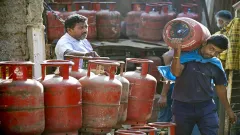
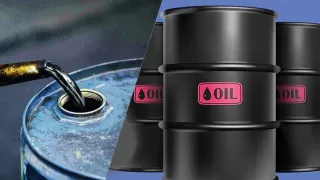
Beyond trade, Germany has used the dialogue to raise strategic concerns, particularly India’s continued reliance on Russian energy and military equipment. Berlin has urged New Delhi to gradually diversify its sources, aligning more closely with European partners.
India, however, remains one of the largest buyers of Russian oil and gas, alongside China, and much of its military hardware is of Russian origin. German leaders have acknowledged the complexity of this dependence, emphasizing dialogue rather than confrontation.
Merz noted that while Germany and India share concerns over global conflicts, especially in Europe, the realities of energy security and defence procurement make rapid shifts challenging for India.
Growing Urgency Amid Shifting Global Trade Dynamics
The urgency behind the EU-India trade talks has intensified as global trade patterns shift. Recent tariff hikes imposed by the United States on various trading partners, including India, have disrupted established supply chains and slowed progress on bilateral agreements.
A separate India-U.S. trade initiative collapsed last year following a breakdown in communication, leaving both sides searching for alternative partnerships. In this context, the EU-India pact is seen as a timely opportunity to stabilise and expand trade flows.
The agreement would also build on the EU’s recent deal with South America’s Mercosur bloc, reinforcing Europe’s strategy of diversifying trade relationships as global economic rules evolve.
Trade Volumes Highlight Mutual Dependence
Economic data underscores the importance of the relationship. Bilateral trade between India and the European Union reached approximately 120 billion euros in 2024, making the EU India’s largest trading partner.
This scale of exchange reflects deep interdependence across sectors such as pharmaceuticals, engineering goods, chemicals, and information technology services. A comprehensive trade agreement could further boost these figures by reducing barriers and encouraging new investments.
Businesses on both sides have expressed optimism that a deal would create more predictable market conditions, enabling long-term planning and innovation.
Protectionism and Supply Chain Challenges
Chancellor Merz has warned of what he described as a renaissance of unfortunate protectionism worldwide. According to him, rising trade barriers harm both Germany and India by increasing costs and disrupting supply chains.
Recent export controls introduced by China on critical minerals used in automotive manufacturing have already caused months of disruption. German carmakers, in particular, have felt the impact, highlighting the risks of overdependence on limited suppliers.
Restrictions on semiconductors and strategic materials have further complicated global manufacturing, strengthening the case for diversified trade partnerships such as the proposed EU-India agreement.
Broader Cooperation Beyond Trade
Alongside the trade discussions, India and Germany have signed agreements in areas including critical minerals, healthcare, and artificial intelligence. These initiatives point to a broader partnership that extends beyond tariffs and market access.
Collaboration in emerging technologies and sustainable development is expected to play a key role in future EU-India relations. Joint projects could enhance innovation while addressing shared challenges such as climate change and digital transformation.
Such cooperation reinforces the idea that the trade deal is not an isolated initiative but part of a wider strategic alignment.
Outlook for the EU-India Trade Agreement
With negotiators indicating that talks are nearing their final stages, expectations are rising that a breakthrough could be achieved soon. If concluded by the end of January, the agreement would mark a milestone in EU-India relations.
While challenges remain, particularly around tariffs, environmental standards, and market access, political momentum appears stronger than at any point in recent years. The involvement of top EU leaders underscores the importance attached to the deal.
As global trade faces increasing uncertainty, a comprehensive EU-India free trade agreement could serve as a powerful signal of cooperation, openness, and shared economic ambition.
Also Read: Defence Sourcing Based on National Interest, Says India