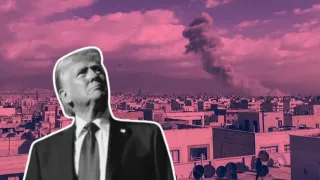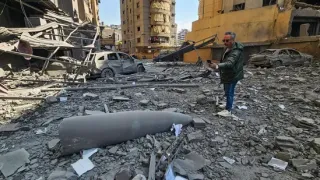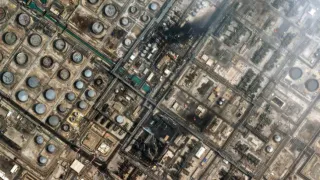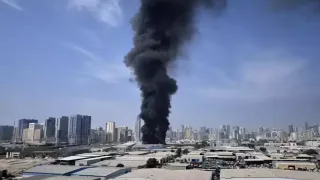
Renowned economist Jeffrey Sachs has issued a stark warning about the direction of global geopolitics, arguing that recent actions by the United States signal a dangerous erosion of international norms. Speaking after his remarks at the United Nations, Sachs suggested that Iran could emerge as the next major flashpoint following Venezuela, with consequences far more severe and far-reaching. His comments have sparked intense debate about the stability of the current world order and the risks of unchecked military and political power.
Sachs described the idea of a so-called rules-based international system as largely illusory, claiming that decisions are increasingly driven by strategic interests rather than constitutional checks or international law. According to him, decades of interventionist policies have created a pattern in which regime change becomes a recurring tool, often justified by shifting narratives but leaving lasting instability in their wake.
At the heart of Sachs’s warning is the fear that escalating rhetoric and behind-the-scenes maneuvering could push the world toward a far more dangerous confrontation, one that involves multiple global powers and regions already fraught with tension.
Jeffrey Sachs Critique of US Foreign Policy
Sachs has long been a vocal critic of intervention-driven foreign policy, and his latest remarks reinforce that stance with renewed urgency. He argues that American foreign policy is shaped less by elected leadership and more by entrenched security and military institutions that persist regardless of who occupies the White House. This continuity, he suggests, explains why similar strategies reappear across different administrations.
According to Sachs, these strategies often involve economic pressure, covert operations, and, in extreme cases, direct military action. While such measures are framed as necessary for security or democracy, he believes they frequently undermine sovereignty and contribute to prolonged instability rather than resolution.
Venezuela as a Precedent
The situation in Venezuela, Sachs notes, offers a clear example of how prolonged pressure campaigns can reshape a nation’s trajectory without achieving their stated goals. Years of sanctions, political isolation, and attempted interventions have severely damaged the country’s economy while failing to produce a stable political transition.
He emphasizes that Venezuela’s experience should serve as a warning rather than a template. Instead of fostering democratic outcomes, such approaches often entrench divisions and deepen humanitarian crises, leaving ordinary citizens to bear the cost.
Why Iran Represents a Greater Risk
Sachs’s most alarming assessment centers on Iran, which he believes presents a far more complex and volatile scenario. Unlike Venezuela, Iran sits at the crossroads of major geopolitical interests, with significant regional influence and advanced military capabilities. Any escalation there, he argues, would not remain localized.
The presence of multiple global and regional powers, coupled with advanced weapons systems and longstanding rivalries, creates a setting where miscalculation could rapidly spiral into a broader conflict. Sachs warns that such a scenario could destabilize entire regions and disrupt global security and economic systems.
Role of Alliances and Power Politics
Another key element of Sachs’s argument is the influence of alliances in shaping foreign policy decisions. He suggests that strategic partnerships can sometimes amplify aggressive postures, particularly when aligned interests override broader concerns about international law and humanitarian impact.
This dynamic, he notes, increases the likelihood of confrontations that are framed as defensive but carry offensive implications. The resulting tension places immense pressure on diplomatic institutions that are meant to prevent conflict rather than react to it.
Global Reactions and the Silence of Many Nations
Sachs also points to what he sees as a muted response from much of the international community. Many governments, he argues, hesitate to speak out due to fear of economic or political repercussions. This silence, however, risks normalizing actions that undermine the very principles of sovereignty and non-aggression.
He contrasts this with more forthright responses from a handful of countries that have openly questioned the legality and morality of such actions. According to Sachs, a stronger collective stance could act as a deterrent against further escalation.
Implications for the World Order
The broader implication of Sachs’s warning is that the current trajectory threatens the stability of the global system itself. When powerful nations act without meaningful accountability, the foundations of international cooperation begin to erode. This, he argues, increases the likelihood of conflict not just in one region but across multiple fronts.
He stresses that the consequences would not be limited to military outcomes. Economic shocks, humanitarian crises, and long-term political fragmentation could follow, affecting countries far removed from the initial conflict zones.
The Call for Restraint and International Law
At the core of Sachs’s message is a call for restraint and a renewed commitment to international law. He urges world leaders to recognize that short-term strategic gains often come at the expense of long-term global stability.
By prioritizing dialogue, multilateral institutions, and respect for sovereignty, Sachs believes it is still possible to avoid the most dangerous outcomes. However, he cautions that the window for such action may be narrowing as rhetoric hardens and positions become more entrenched.
A Warning for the Future
Sachs’s assessment ultimately serves as a warning rather than a prediction set in stone. He emphasizes that choices made now will shape the global landscape for decades to come. Whether the world moves toward cooperation or confrontation, he suggests, depends on the willingness of leaders to step back from escalation.
As tensions continue to rise in various regions, his words underscore the importance of vigilance, diplomacy, and a collective commitment to preventing conflicts that could redefine the global order in destructive ways.
Also Read: Yash Toxic First Look Reveals Rukmini Vasanth as Mellisa