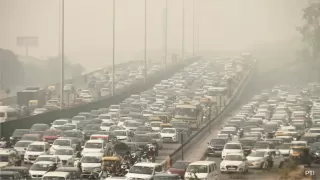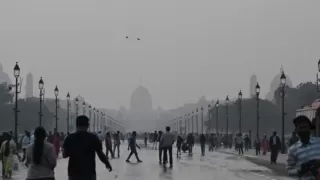
North India continues to reel under intense winter conditions as dense fog and a biting cold wave grip several states, disrupting daily life and travel. Early morning visuals across cities revealed near-zero visibility, slowed traffic movement, and major delays in air operations, highlighting the severity of the weather pattern.
The India Meteorological Department (IMD) has stepped up warnings, issuing orange and yellow alerts across multiple regions. With cold day conditions expected to persist and fog intensity fluctuating over the coming days, residents are advised to stay alert as temperatures dip and visibility remains poor.
IMD issues orange and yellow alerts across North India
The IMD has issued a combination of orange and yellow alerts for several states, warning of dense to very dense fog along with cold wave conditions. East Uttar Pradesh has been placed under an orange alert due to heightened risk, while western parts of the state, along with Delhi, are under a yellow alert.
According to the weather agency, dense fog is expected during night and morning hours across Punjab, Haryana, West Uttar Pradesh, and North Madhya Pradesh. Other eastern regions are also likely to experience reduced visibility, making early morning travel particularly challenging.
Dense fog reduces visibility to a few metres
On Monday morning, dense fog enveloped Delhi, Punjab, Haryana, Uttar Pradesh, and Madhya Pradesh, with visibility dropping to just a few metres in several locations. Major roads, highways, and urban stretches witnessed slow-moving traffic as commuters struggled with poor sightlines.
Visuals from prominent locations such as Delhi’s ITO and Ayodhya in Uttar Pradesh showed thick fog layers blanketing streets and landmarks. The foggy conditions are expected to continue intermittently, especially during late night and early morning hours.
Cold wave linked to western disturbance and jet stream
Meteorologists have attributed the sudden dip in temperatures to the influence of a western disturbance combined with the presence of a subtropical westerly jet stream over north India. This interaction has intensified cold air movement, triggering cold day conditions in multiple states.
On Sunday, cold day conditions were observed across Delhi, Punjab, and Haryana, while snowfall in the higher reaches of Jammu and Kashmir marked the onset of Chillai-Kalan, the harshest 40-day winter period in the region.
Snowfall and rain predicted in hilly regions
The IMD has forecast heavy rainfall, snowfall, and possible snowstorms in Jammu and Kashmir, Ladakh, and Himachal Pradesh. These regions are expected to witness significantly reduced visibility, in some cases dropping below 400 metres.
Uttarakhand is also likely to experience scattered rainfall and snowfall until December 24. Authorities have urged travelers and residents in mountainous areas to exercise caution due to slippery roads and sudden weather changes.
Cold day conditions to persist in several states
In its latest press release, the IMD stated that cold day conditions are very likely in isolated pockets of Uttarakhand and Jharkhand. Punjab, Haryana, Chandigarh, Bihar, and Uttar Pradesh are also expected to experience similar conditions on December 22 and 23.
Southern states have not been spared either, with warnings issued for cold wave conditions in parts of Karnataka and Telangana during the same period, indicating the wide reach of the current winter spell.
Delhi weather today: Temperature outlook
In the national capital, minimum temperatures are expected to settle between 8 and 10 degrees Celsius, while maximum temperatures may hover around 20 to 22 degrees Celsius. Despite relatively stable daytime temperatures, mornings and nights are likely to remain harsh.
The meteorological department has forecast moderate fog for the city, advising commuters to plan travel accordingly, especially during early hours when visibility remains most affected.
Flight operations hit as fog disrupts air travel
Dense fog has severely impacted flight operations, particularly at Delhi’s Indira Gandhi International Airport. On Sunday alone, more than 105 flights were cancelled, including both arrivals and departures, as low visibility hampered runway operations.
In addition to cancellations, over 450 flights experienced significant delays, leading to long waiting times for passengers. Airport authorities implemented low visibility procedures to ensure safety amid challenging weather conditions.
Impact extends to other airports
The disruption was not limited to Delhi. At Srinagar International Airport, nearly 11 flights were cancelled due to adverse weather conditions, further underscoring the widespread impact of fog and winter weather across northern regions.
Passengers have been advised to check flight statuses before heading to airports and allow extra time for travel as fog-related disruptions may continue over the next few days.
Advisory for residents and commuters
With fog and cold wave conditions expected to persist, authorities have urged people to take necessary precautions. Reduced visibility increases the risk of road accidents, while prolonged exposure to cold can pose health concerns, particularly for the elderly and children.
Residents are advised to stay updated with local weather forecasts, dress warmly, and avoid unnecessary travel during early morning hours. As winter tightens its grip, preparedness and caution remain key to navigating the challenging conditions ahead.
Also Read: Assam Train Accident: 7 Elephants Killed in Rajdhani Crash