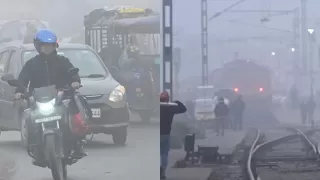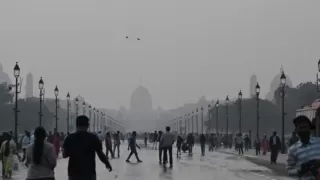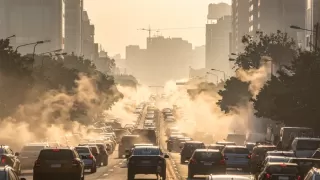
Delhi’s fight against worsening air pollution has entered a stricter phase, with fresh measures under the Graded Response Action Plan set to impact daily movement across the National Capital Region. As winter smog tightens its grip, authorities have announced sweeping curbs aimed at cutting vehicular emissions, one of the biggest contributors to toxic air in the city.
The new restrictions are expected to directly affect commuters, transporters and businesses that rely on cross-border travel between Delhi and neighbouring NCR cities. With enforcement mechanisms already in place, the changes signal a tougher stance on compliance and accountability during periods of severe air quality.
At the centre of the policy is a major shift in how vehicles from outside Delhi will be treated, a move that could impact nearly 1.2 million vehicles registered across NCR states and alter daily travel patterns for thousands of people.
Only BS6 Vehicles Allowed During GRAP III and IV
According to Environment Minister Manjinder Singh Sirsa, only BS6-compliant vehicles registered outside Delhi will be permitted to enter the national capital when GRAP stages III and IV are in force. These stages are triggered when air quality deteriorates to severe or very poor levels, typically during the peak winter months.
The decision applies uniformly to private and commercial vehicles coming from neighbouring NCR states. Authorities say the intent is to prevent higher-emission vehicles from adding to Delhi’s pollution burden at a time when atmospheric conditions already trap pollutants close to the ground.
PUC Certificates Now Central to Enforcement
Another key aspect of the new measures is strict enforcement of Pollution Under Control certification. Vehicles without a valid PUC certificate risk being denied petrol or diesel at fuel stations across Delhi. The government has indicated that vehicle owners were given a brief window to ensure compliance before enforcement began.
Automatic Number Plate Recognition cameras have already been installed at petrol pumps, enabling authorities to identify non-compliant vehicles in real time. This technological push is meant to reduce manual checks while ensuring that vehicles failing emission norms are effectively restricted.
Why the Government Tightened the Rules
Vehicular emissions are among the largest contributors to Delhi’s winter pollution crisis. Experts estimate that vehicles account for up to 40 percent of particulate pollution in parts of the NCR, especially along heavily travelled corridors and arterial roads.
During winter, low wind speeds and cooler temperatures prevent pollutants from dispersing, leading to persistent smog. By restricting non-BS6 vehicles and tightening PUC enforcement, authorities aim to reduce emission loads and protect public health during critical weeks.
Scale of Impact Across NCR Cities
The new rules are expected to affect a significant number of vehicles that routinely enter Delhi for work, trade and personal travel. Estimates suggest that Gurgaon has over two lakh non-BS6 vehicles likely to be impacted, while Noida accounts for more than four lakh such vehicles.
Ghaziabad alone is estimated to have around 5.5 lakh affected vehicles and commuters. These numbers highlight how deeply interconnected Delhi and its surrounding NCR cities are, and why the policy is being closely watched across the region.
Challenges for Petrol Pump Operators
While enforcement is aimed at vehicles, petrol pump owners have raised concerns about practical challenges. With more than 650 petrol pumps operating across Delhi and each serving thousands of customers daily, verifying PUC certificates for every vehicle could slow operations significantly.
Operators have also expressed concerns about potential disputes and altercations with customers denied fuel. Sources say industry representatives have sought clarity and dialogue with authorities to ensure smooth implementation without compromising safety at fuel stations.
Traffic Police Data Highlights Enforcement Push
Data from the Delhi Traffic Police indicates that enforcement has already intensified. Over eight lakh vehicles have reportedly been fined for lacking valid PUC certificates, reflecting the scale of non-compliance across the region.
Authorities have also impounded nearly 20,000 old vehicles that exceed age limits, defined as more than 10 years for diesel vehicles and over 15 years for petrol vehicles. Additionally, hundreds of non-compliant buses and trucks have been stopped from entering Delhi under the tightened norms.
Public Reaction and Commuter Frustration
The announcement has triggered mixed reactions from commuters, particularly those who travel daily from cities like Noida, Gurugram and Ghaziabad. Many have expressed frustration over the short notice and the disruption to established travel routines.
Critics argue that while vehicle restrictions are enforced strictly, other pollution sources such as road dust, construction activity and industrial emissions receive comparatively less attention. Supporters, however, believe the measures are necessary given the scale of Delhi’s air quality crisis.
Part of a Broader Pollution Control Strategy
The BS6-only entry rule is not an isolated step. It builds on earlier measures that restricted older goods vehicles and phased out high-emission transport under directions from pollution control authorities. Over time, these rules have expanded from commercial vehicles to include private ones during severe pollution phases.
The government has also encouraged reduced on-road activity, temporary construction bans and remote work arrangements when pollution levels spike, signalling a multi-pronged approach to tackling the crisis.
What Vehicle Owners Need to Keep in Mind
Drivers of non-BS6 vehicles registered outside Delhi should be prepared for travel restrictions whenever GRAP III or IV is enforced. Vehicles without valid PUC certificates face the risk of being denied fuel and fined during checks at entry points and fuel stations.
As winter conditions persist, these measures could remain in effect for extended periods. Staying informed about GRAP stages, emission compliance and documentation requirements will be essential for anyone planning to travel into Delhi from neighbouring NCR cities in the coming weeks.
Also Read: Bondi Horror: Naveed Akram Charged with 15 Murders Case