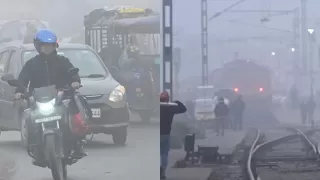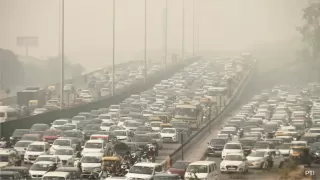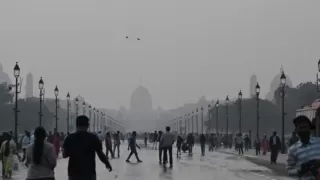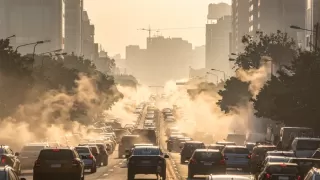
Delhi-NCR once again woke up to choking air as pollution levels surged sharply, pushing authorities to activate tougher emergency measures. A sudden change in weather conditions combined with weak dispersion of pollutants led to a rapid decline in air quality, alarming residents and policymakers alike.
What appeared manageable late Friday quickly escalated by Saturday morning, with the Air Quality Index crossing into the ‘Severe’ category. The worsening situation prompted immediate intervention by regulators, highlighting how fragile the region’s air quality remains during winter months.
The Commission for Air Quality Management (CAQM) confirmed that the deterioration was driven by a mix of slow wind speeds, a stable atmosphere and unfavourable meteorological factors, all of which trapped pollutants close to the surface and prevented their dispersal.
Why Delhi-NCR Air Quality Deteriorated Suddenly
According to the CAQM, the sharp spike in pollution was not caused by a single source but by a combination of weather and environmental factors. Slow wind speed reduced the movement of polluted air, while a stable atmosphere prevented vertical mixing, allowing harmful particles to accumulate rapidly.
Unfavourable weather parameters during early winter often worsen pollution episodes in Delhi-NCR. As temperatures drop, the boundary layer becomes shallow, effectively acting like a lid that traps emissions from vehicles, construction sites, industries and household activities near ground level.
The lack of dispersal mechanisms meant that even routine emission levels were enough to push the AQI from ‘Very Poor’ to ‘Severe’ within hours, underlining how sensitive air quality is to meteorological changes.
AQI Crosses Severe Mark Despite Lower 24-Hour Average
While the national capital’s 24-hour average AQI stood at 349, placing it in the ‘Very Poor’ category, real-time readings told a more worrying story. By 10 am, monitoring stations across the region recorded AQI levels touching 401, officially entering the ‘Severe’ range.
This rapid escalation highlighted the limitations of relying solely on daily averages during volatile pollution episodes. Morning hours often see a sharp rise in particulate matter due to traffic emissions combined with stagnant air, making conditions particularly hazardous for vulnerable groups.
Health experts warn that exposure during such peak hours can have serious respiratory and cardiovascular impacts, especially on children, the elderly and people with pre-existing health conditions.
Stage-III GRAP Curbs Enforced Across Delhi-NCR
In response to the rising pollution trend, the CAQM’s GRAP Sub-Committee decided to invoke Stage-III measures with immediate effect across the National Capital Region. This stage is categorised as ‘Severe’ and brings with it a set of stringent restrictions aimed at preventing further deterioration.
Authorities clarified that Stage-III measures will operate alongside restrictions already enforced under Stages I and II, creating a layered approach to pollution control. The goal is to cut emissions from multiple sources simultaneously.
The decision reflects growing concern over the pace at which air quality can worsen and the need for swift preventive action rather than delayed response.
Construction, Mining and Industrial Activities Suspended
One of the most impactful measures under Stage-III is the suspension of all non-essential construction and demolition activities. Dust from construction sites is a major contributor to particulate pollution, especially during dry winter conditions.
In addition to construction, stone crushing and mining operations have been barred across the region. These activities release large amounts of dust and fine particles that significantly degrade air quality when dispersion is poor.
Authorities have been directed to ensure strict enforcement on the ground, with inspections and penalties for violations to prevent unchecked emissions.
Vehicular Restrictions Tightened to Curb Emissions
Vehicular pollution remains one of the largest contributors to Delhi-NCR’s air quality crisis. Under Stage-III GRAP, BS III petrol and BS IV diesel four-wheelers have been prohibited from plying in key cities including Delhi, Gurugram, Faridabad, Ghaziabad and Gautam Buddh Nagar.
The curbs also include a ban on the entry of older diesel goods vehicles into Delhi. These vehicles are known to emit higher levels of harmful pollutants compared to newer, cleaner models.
Authorities hope that reducing the number of high-emission vehicles on roads will provide immediate relief and help stabilise AQI levels during this critical period.
Schools and Offices Shift to Hybrid Working Models
To minimise exposure, especially for children, schools up to Class 5 have been directed to shift to a hybrid mode of learning. This move aims to reduce outdoor exposure while ensuring continuity in education.
Offices across Delhi-NCR have also been advised to function with only 50 per cent staff on-site. Encouraging work-from-home arrangements not only reduces commuter traffic but also lowers overall emissions during peak hours.
These steps reflect a growing emphasis on balancing public health concerns with economic and educational continuity.
Understanding the GRAP Framework
The Graded Response Action Plan is a seasonal pollution-control framework implemented in Delhi-NCR, primarily during winter when air quality routinely deteriorates. It is designed to trigger pre-defined measures based on pollution severity.
GRAP is structured into four stages determined by AQI levels. Stage I applies when air quality is ‘Poor’ with AQI between 201 and 300, while Stage II comes into force under ‘Very Poor’ conditions with AQI between 301 and 400.
Stage III, currently in effect, corresponds to ‘Severe’ air quality with AQI between 401 and 450. The final stage, Stage IV, known as ‘Severe Plus’, is activated when AQI exceeds 450 and includes the harshest restrictions.
Health Advisory Amid Severe Pollution
With AQI levels entering the severe zone, health experts advise residents to limit outdoor activities, especially during early morning and late evening hours when pollution tends to peak.
People with respiratory issues, heart conditions, pregnant women and children are urged to take extra precautions, including the use of masks and air purifiers indoors where possible.
Authorities have also reiterated the importance of community participation, urging citizens to avoid unnecessary travel, carpool where possible and strictly follow pollution-control guidelines.
Outlook for the Coming Days
The effectiveness of Stage-III GRAP curbs will largely depend on both enforcement and changes in weather conditions. Improved wind speed or atmospheric movement could help disperse pollutants, offering temporary relief.
However, officials caution that without sustained behavioural changes and long-term solutions, such episodes are likely to recur. Winter pollution remains a persistent challenge for Delhi-NCR.
The current crisis once again underscores the need for coordinated action between authorities, industries and citizens to tackle air pollution beyond emergency measures.
Also Read: Akshaye–Karisma Marriage? Randhir Took Proposal to Vinod!