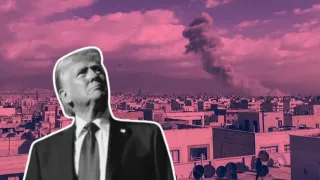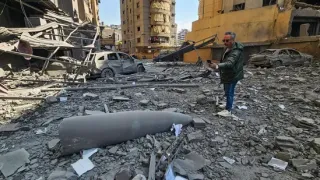
The promise sounded almost irresistible. Standing before global leaders at the World Economic Forum in Davos, US President Donald Trump unveiled what he described as a bold new pathway to global harmony, declaring that decades of suffering, hatred and bloodshed could finally be brought to an end.
For a world exhausted by endless conflict, the message carried undeniable emotional weight. Yet behind the soaring rhetoric, Trump’s newly announced Board of Peace has ignited intense debate across diplomatic circles, raising fundamental questions about power, legitimacy and the future of the international system.
As governments weigh whether to embrace or resist the initiative, many are asking whether this new body represents genuine innovation in peacemaking — or an unprecedented challenge to the authority of the United Nations.
Trump Unveils Board of Peace at Davos
The announcement came on one of the world’s most visible stages, with Trump framing the Board of Peace as a historic opportunity to reshape global conflict resolution.
He presented the initiative as a collective effort capable of delivering lasting peace not only in the Middle East but across conflict zones worldwide.
The symbolism of launching such a body at Davos underscored his desire to give the project immediate international stature.
A Vision Framed in Grand Language
Trump’s speech leaned heavily on emotional appeal, describing a future free from generational hatred.
He portrayed the Board as a tool that could succeed where existing institutions had failed.
The message resonated with audiences longing for tangible progress in long-running wars.
Global Reaction Divided From the Start
While some leaders offered cautious optimism, others reacted with visible unease.
Concerns emerged quickly about concentration of power and the implications for multilateral diplomacy.
Several capitals signaled that enthusiasm would depend on concrete details rather than rhetoric.
Support From Trump’s European Allies
Among Trump’s strongest supporters in Europe, praise was swift and enthusiastic.
Hungary’s Prime Minister Viktor Orban openly welcomed the initiative, framing it as proof of Trump’s unique ability to force peace through strength.
Such endorsements highlighted a growing ideological divide within Europe.
Warnings From Skeptical Leaders
Other leaders responded with stark caution.
Poland’s Prime Minister Donald Tusk issued a terse warning that his country would not allow itself to be manipulated.
The comment reflected deeper anxiety about sovereignty and unequal influence.
Origins in the Gaza Ceasefire Efforts
The idea for the Board of Peace did not emerge overnight.
It was originally conceived during US-led mediation efforts aimed at ending the Gaza conflict.
Those discussions eventually received endorsement through a United Nations Security Council resolution.
From Regional Tool to Global Ambition
What began as a narrowly focused mechanism has now expanded dramatically.
The Board’s scope appears to extend far beyond Gaza, positioning itself as a global peace broker.
This transformation has intensified fears of institutional overlap.
Chairman for Life Clause Raises Alarm
Leaked drafts of the Board’s charter reveal provisions that have startled diplomats.
Under the proposal, Trump would serve as chairman in perpetuity, even after leaving office.
This unprecedented structure has triggered accusations of personalisation of global diplomacy.
Extraordinary Powers Under the Charter
The chairman would reportedly hold authority to invite or exclude member states.
He would also possess the power to create or dissolve subsidiary bodies.
Perhaps most controversially, he would appoint his own successor.
High Financial Barrier for Membership
Permanent membership is reportedly tied to a contribution of one billion dollars.
The price tag has raised concerns about creating a peace institution accessible only to wealthy nations.
Critics argue this undermines inclusivity.
Board Membership Spans Diverse Regions
Nineteen countries attended the inauguration ceremony.
Participants ranged from Latin America to the Caucasus and the Gulf region.
Officials claim many more states have privately expressed willingness to join.
Several Nations Choose to Hold Back
Not all governments were eager to sign on.
Sweden publicly stated that it would not participate under the current draft.
Norway and others called for further dialogue before committing.
Concerns Over Russian Participation
The possibility of Russia joining the Board has unsettled several European states.
Officials expressed discomfort with peace discussions involving active belligerents.
Moscow itself signaled that it was still consulting partners.
Middle East Nations Attach Conditions
A group of predominantly Muslim countries signaled support tied specifically to Gaza.
Their backing emphasized reconstruction and a just peace framework.
However, leaked charter drafts reportedly make no direct reference to Gaza.
Fears of Undermining the UN
At the heart of the controversy lies one central question.
Could the Board of Peace sideline the United Nations?
For many diplomats, this concern overshadows all others.
Trump’s Mixed Messages on the UN
Trump has delivered conflicting statements about the relationship between the Board and the UN.
At Davos, he claimed the new body would work in conjunction with the United Nations.
Yet days earlier, he suggested it might eventually replace it.
Criticism of UN Effectiveness
The president has long argued that the UN has failed to live up to its potential.
He has accused it of inefficiency and political paralysis.
These critiques resonate with frustrations shared by many nations.
A UN Hampered by Structural Limits
The UN Security Council has struggled for decades with veto-driven gridlock.
Major conflicts have often remained unresolved due to political deadlock.
This reality has eroded confidence in the institution’s peacemaking role.
Veteran Diplomats Offer Measured Views
Some former UN officials view the Board as a symptom of deeper institutional failure.
They argue that frustration with the UN has reached a tipping point.
However, they caution against abandoning inclusivity.
The Risk of Exclusive Peace Clubs
Critics warn that limiting decision-making to select allies undermines legitimacy.
Peace processes, they argue, require broad representation.
Exclusion may generate instability rather than resolve it.
Law of Power Versus Power of Law
UN leadership has expressed concern over shifting global norms.
The growing dominance of power-based diplomacy worries multilateral institutions.
This tension defines the current global order.
Trump’s Track Record in Ceasefires
The president frequently points to multiple conflicts he claims to have ended.
Observers note that many were temporary ceasefires rather than permanent settlements.
Several have since collapsed.
Mixed Outcomes in Recent Conflicts
Peace agreements in parts of Africa and Southeast Asia have shown fragility.
Renewed violence has followed diplomatic breakthroughs.
This underscores the complexity of peacemaking.
Gaza as the Board’s First Major Test
The transition from ceasefire to lasting settlement remains unresolved.
Key parties hold fundamentally opposing visions for the region.
This presents an immediate credibility challenge.
Internal Contradictions Among Members
The Board includes leaders with deeply conflicting political objectives.
Some reject Palestinian statehood outright.
Others insist it is non-negotiable.
Ukraine Conflict Looms Large
Ukraine remains central to global security calculations.
President Zelensky has resisted negotiations involving Moscow.
This complicates any unified peace framework.
Complex Structure Beneath the Board
Multiple executive layers reportedly operate under the main body.
Several focus primarily on Gaza governance and reconstruction.
These include technocrats, former diplomats and regional officials.
Inclusion of Business and Wealth
Billionaires and private financiers are also involved in advisory roles.
This blending of capital and diplomacy marks a notable shift.
Supporters see efficiency, critics see imbalance.
Reform of Global Institutions Back on Agenda
Ironically, the Board has revived debate on UN reform.
Calls to modernize the Security Council are resurfacing.
Many agree the current structure reflects a post-war world that no longer exists.
A Catalyst for Long-Delayed Debate
Some analysts believe the initiative may unintentionally help the UN.
Pressure could force long-overdue structural reform.
In this sense, disruption may trigger renewal.
Leadership Transition at the UN Approaches
Discussions are intensifying over the next UN secretary-general.
This moment adds urgency to questions of global governance.
The timing of Trump’s move is therefore significant.
Peacemaking Proves Slower Than Promised
Trump has acknowledged that ending wars takes longer than anticipated.
Diplomacy, he has learned, rarely follows timelines.
The process remains fragile and unpredictable.
Trump Embraces Peacemaker Persona
Despite criticism, the president appears energized by his new role.
He has framed himself as a decisive alternative to bureaucratic systems.
The narrative appeals strongly to his supporters.
Unanswered Questions Remain
Can peace be engineered through centralized authority?
Or does legitimacy require shared global ownership?
The world is still waiting for clarity.
Conclusion: A Turning Point for Global Diplomacy
Trump’s Board of Peace has injected uncertainty into an already unstable global order.
Whether it becomes a genuine instrument for peace or a rival to the UN remains unresolved.
What is clear is that the debate over who leads the world toward peace has entered a bold and unpredictable new chapter.
Also Read: Samsung Galaxy S26 Ultra New Release Date Details Leak