With the release of Dhurandhar, audiences have found themselves pulled into a whirlwind of speculation. A single moment in the film, barely a few seconds long, has opened the floodgates to one of the most exciting fan debates in recent memory: could Dhurandhar and the 2019 blockbuster Uri: The Surgical Strike belong to the same cinematic universe?
The theory didn’t come from an action sequence, a crossover cameo, or a post-credit scene. Instead, it originated from a name, a detail subtle enough to miss, but unforgettable for those who caught it.
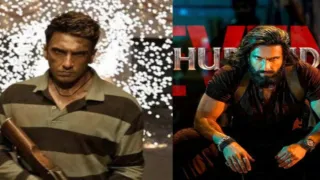
In Dhurandhar, the protagonist first appears under an alias: Hamza. Eventually, the mask drops, revealing his true identity: Jaskirat Singh Rangi. For many viewers, this wasn’t just another character name. It instantly transported them back to a moment from Uri, a moment that once felt minor but now feels explosive.
In Uri, Kirti Kulhari’s character, Flight Lieutenant Seerat Kaur, mentions her martyred husband during a heartfelt conversation. The name she utters is the same: Captain Jaskirat Singh Rangi, an officer who lost his life in the Naushera sector ambush.
That reference in Uri was never expanded upon. The character was never shown. Yet today, it is the centrepiece of a massive online theory linking two films released years apart.
Following Dhurandhar’s release, social media platforms lit up with reactions, breakdowns, and threads connecting the dots. For many fans, the identical name cannot be a coincidence.
One enthusiastic viewer posted, Uri x Dhurandhar is real. The name Jaskirat Singh Rangi confirms it. They’re building something big.
Another fan went full detective mode, crafting an elaborate timeline predicting that Dhurandhar may actually serve as the first chapter in a long-term interconnected narrative designed by the filmmakers.
But not everyone is convinced. Sceptics argue that the match could be a clever Easter egg rather than an actual continuity link. One user even countered, The operative programme shown in Dhurandhar recruits criminals serving lifetime or death sentences. The Jaskirat in Uri was a decorated officer. Stop forcing a connection.
These contrasting viewpoints have only fuelled the conversation further. What started as a tiny detail has now become a battleground of theories and interpretations.
Filmmakers have long enjoyed planting hidden clues, callbacks, and subtle references to reward loyal fans. From Hollywood crossovers to Indian cinema’s mythology-based hints, Easter eggs have become an art of their own.
The shared name may very well be an intentional nod rather than a confirmation. Or it could be the first brick in a larger, carefully crafted universe that director Aditya Dhar is building quietly in the background.
As of now, no official statement has been made. But the silence itself is adding layers to the mystery.
The biggest impact isn’t whether the theory is true; it’s how effectively it has reignited public interest. The moment fans spotted the connection, discussions exploded, memes surged, and many even revisited Uri searching for more hidden details.
Whether or not the two films are truly connected, Dhurandhar has achieved something powerful: it has generated buzz, revived nostalgia around a beloved film, and sparked a sense of curiosity that keeps viewers engaged.
At this point, both possibilities remain open. The name might be a playful Easter egg dropped for attentive viewers, or a deliberate seed planted for future interlinked storytelling.
Either way, Dhurandhar has done what great cinema often does: it has created conversation, stirred imagination, and left the audience hungry for more.
Until clarity emerges, one thing is certain: the debate is far from over.