Global diplomacy witnessed a significant development as a new international initiative aimed at stabilizing the Middle East moved forward. With tensions in the region continuing to affect global politics, fresh efforts are being made to establish mechanisms that encourage dialogue, reconstruction, and long-term peace.
The announcement came at a time when the Israel-Gaza conflict remains fragile despite ceasefire efforts. World leaders and regional powers have increasingly emphasized the need for coordinated governance and humanitarian rebuilding to prevent renewed violence.
Against this backdrop, the creation of a new multilateral platform has drawn widespread attention, signaling a potential shift in how peace initiatives may be managed in the coming phase of negotiations.
Board of Peace Introduced Under Ceasefire Framework
The Board of Peace was unveiled as part of phase two of the fragile ceasefire agreement with Hamas to end the Israel-Gaza conflict. The initiative is positioned as a transitional mechanism designed to maintain stability while broader political solutions are negotiated.
This phase focuses on moving beyond immediate military de-escalation toward structured governance and long-term recovery. The framework seeks to prevent repeated cycles of conflict by addressing political, economic, and humanitarian dimensions simultaneously.
Observers view the Board as an attempt to institutionalize peace efforts rather than relying solely on temporary ceasefire arrangements.
Eight Islamic Nations Welcome the Initiative
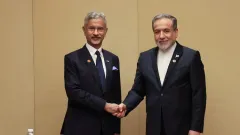
Foreign Ministers from eight Islamic nations collectively welcomed the invitation extended by United States President Donald Trump to join the Board of Peace. Their joint response reflected a rare moment of coordinated regional alignment.
The countries include Qatar, Turkiye, Egypt, Jordan, Indonesia, Pakistan, Saudi Arabia, and the United Arab Emirates. Together, they represent a diverse group spanning the Middle East and Asia.
The unified stance highlighted a shared recognition that sustained peace in Gaza requires regional ownership alongside international support.
Joint Statement Signals Collective Commitment
In a joint statement, the ministers announced their shared decision to participate in the Board of Peace. Each nation agreed to proceed through its own legal and procedural mechanisms to formalize membership.
Several countries confirmed that they had already initiated or completed their joining process, demonstrating early momentum behind the initiative.
The statement emphasized cooperation rather than confrontation, underlining diplomacy as the preferred path forward.
Support for Peace Efforts Led by the United States
The ministers reiterated their support for the peace efforts led by President Trump, framing the initiative as part of broader international engagement rather than unilateral action.
They reaffirmed their commitment to assisting with the Board’s mission during the transitional period outlined in the Comprehensive Plan to End the Gaza Conflict.
This endorsement underscored the belief that sustained international coordination is essential for lasting outcomes.
Role of the Board as a Transitional Administration
The Board of Peace is envisioned as a transitional administration tasked with overseeing governance capacity-building in Gaza. Its responsibilities extend beyond security into civil and institutional development.
Key objectives include restoring administrative functionality, supporting regional diplomatic relations, and laying the groundwork for political normalization.
Such a model aims to bridge the gap between ceasefire enforcement and permanent political settlement.
Focus on Reconstruction and Economic Revival
One of the Board’s central missions involves supporting large-scale reconstruction efforts across Gaza. Infrastructure repair, housing redevelopment, and essential services are expected to form the backbone of this phase.
The initiative also prioritizes attracting investment and mobilizing international funding to revive the local economy.
By integrating economic recovery with political stability, the framework seeks to reduce long-term drivers of conflict.
International Legal Backing Strengthens the Plan
The Comprehensive Plan to End the Gaza Conflict has received endorsement through a United Nations Security Council resolution, providing international legitimacy to the process.
This backing reinforces the framework’s alignment with international law and multilateral diplomacy.
Supporters argue that such legitimacy increases accountability and encourages broader participation from global stakeholders.
Commitment to Palestinian Self-Determination
The participating nations reaffirmed their commitment to a just and lasting peace grounded in the Palestinian right to self-determination.
The framework emphasizes statehood and political dignity as central pillars of regional stability.
This focus aims to address longstanding grievances that have fueled decades of unrest.
Regional Stability as a Shared Objective
Beyond Gaza, the initiative seeks to promote wider security and stability across the Middle East.
Participating countries acknowledged that instability in one part of the region often produces ripple effects across borders.
The Board of Peace is therefore positioned as both a conflict-resolution mechanism and a preventive strategy.
Diplomatic Coordination Among Diverse Nations
The inclusion of nations from different political and cultural backgrounds reflects the broad scope of the initiative.
From Gulf states to South and Southeast Asia, the coalition demonstrates cross-regional cooperation.
This diversity is expected to enhance legitimacy while presenting challenges in coordination and consensus-building.
Governance Capacity-Building as a Core Priority
A major focus of the Board involves strengthening local governance structures to ensure effective administration.
This includes training, institutional reform, and the establishment of transparent systems.
Strong governance is viewed as essential to preventing power vacuums that could destabilize ceasefire arrangements.
Capital Mobilization and Long-Term Funding
The framework highlights the importance of capital mobilization to sustain reconstruction and development.
International donors, development institutions, and regional investors are expected to play crucial roles.
Long-term financial planning is intended to move Gaza away from dependency toward economic resilience.
Challenges Facing the Board of Peace
Despite optimism, significant challenges remain. Political divisions, security risks, and humanitarian pressures continue to complicate implementation.
Balancing competing regional interests while maintaining neutrality will be a central test for the Board.
Success will depend largely on sustained cooperation and trust among participants.
Global Reactions and Strategic Implications
The announcement has drawn attention from global powers monitoring developments in the Middle East.
Analysts view the initiative as a potential blueprint for future conflict-resolution frameworks.
Its progress may influence how international bodies approach post-conflict governance worldwide.
Potential Impact on Middle East Diplomacy
If successful, the Board of Peace could reshape diplomatic engagement in the region.
It represents a shift from crisis management toward structured peace-building.
Such an approach may encourage future multilateral solutions to long-standing disputes.
Moving From Ceasefire to Sustainable Peace
The fragile ceasefire that enabled the Board’s creation remains a critical foundation.
Transforming temporary calm into permanent peace requires consistent political will.
The initiative seeks to ensure that ceasefire agreements evolve into durable political outcomes.
Conclusion: A Defining Moment for Regional Cooperation
The decision by eight Islamic nations to join the Board of Peace marks a notable moment in international diplomacy.
While uncertainties remain, the collective commitment reflects growing recognition that lasting peace demands cooperation, reconstruction, and inclusive governance.
As the next phase unfolds, the world will closely watch whether this ambitious framework can translate intention into enduring stability.
Also Read: Trump Cancels Greenland Tariff Threat After NATO Arctic Deal